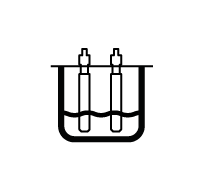
Sensors lifespan
Sensors are expendable material, lifespan and performance depends of use and age
Sensors have a minimum lifespan of 6 months, and some can last up to 18 months. It depends on the type of sensor and its use. They usually become less sensitive over time, and thus lose accuracy. You should replace them from time to time. Normally when it has reached the end of its lifespan it will give anomalous results, out of range or no results at all. If it has been more than 6 months, you can try to do 2 or 3 long conditioning tests in a row, and if it does not respond, replace the sensor that is failing.
The nitrate sensor usually lasts between 6 and 8 months, but the calcium and magnesium sensors can last up to 18 months. There are no fixed rules, as they depend on their use and how saturated the water they have tested is.
Long conditioning
Sensor conditioning is key to achieving good measurements and accuracy, sensors must remain dry except during analysis to make them last, but they must be rehydrated each time they are going to analyze. Rehydration is achieved by conditioning, which should take about 20 minutes, and once a week for 2 hours. This process is automatic, but if you need to do several long conditioning because the results are not valid, you can force to do the following:
- Open the app and go to “Settings aBex sensors”.
- Click on the blue button: “Click here after installing or changing a sensor”.
This will force the system to do a long conditioning on the next analysis.
Manual conditioning
You can also simply leave it submerged in calibration solution for 2 hours to a maximum of 8 hours. To do this, unplug the probe, put the protective cylinder (the one with holes in it) and immerse it in a beaker with aBex calibration solution (Calibration Solution 2). And keep in mind the following:
- It is important to place the protective cylinder so that the tip of the sensor does not touch the bottom of the vessel.
- It is also important not to exceed 8 hours of calibration. Four or six should be sufficient.
- Only the sensor tips should be submerged, the water should not reach the probe holders.
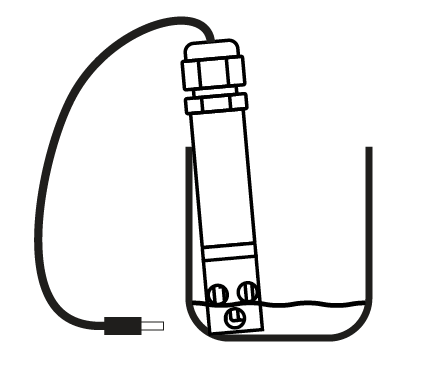
Manual conditioning for one or more sensors
If any of the sensors are not giving normal values, or are not giving values, you can try a long conditioning of only the sensor or sensors that are not giving correct values.
- Remove the sensor or sensors with incorrect values from the probe holder.
- Place them in a container with aBex calibration solution (Calibration solution 2).
- Make sure that only the tip is submerged and hold it in such a way that the probe does not touch the bottom of the container.
- You can also remove the sensors that are giving correct values, and submerge the probe holder with the protective cylinder and the sensors with wrong values, taking advantage of the hours when there is no analysis.